
Design reference: this page is not presented as a completed Benson Display client project. Use the layout and fixture ideas to describe your own requirements; specifications and project scope need separate confirmation.
Construction
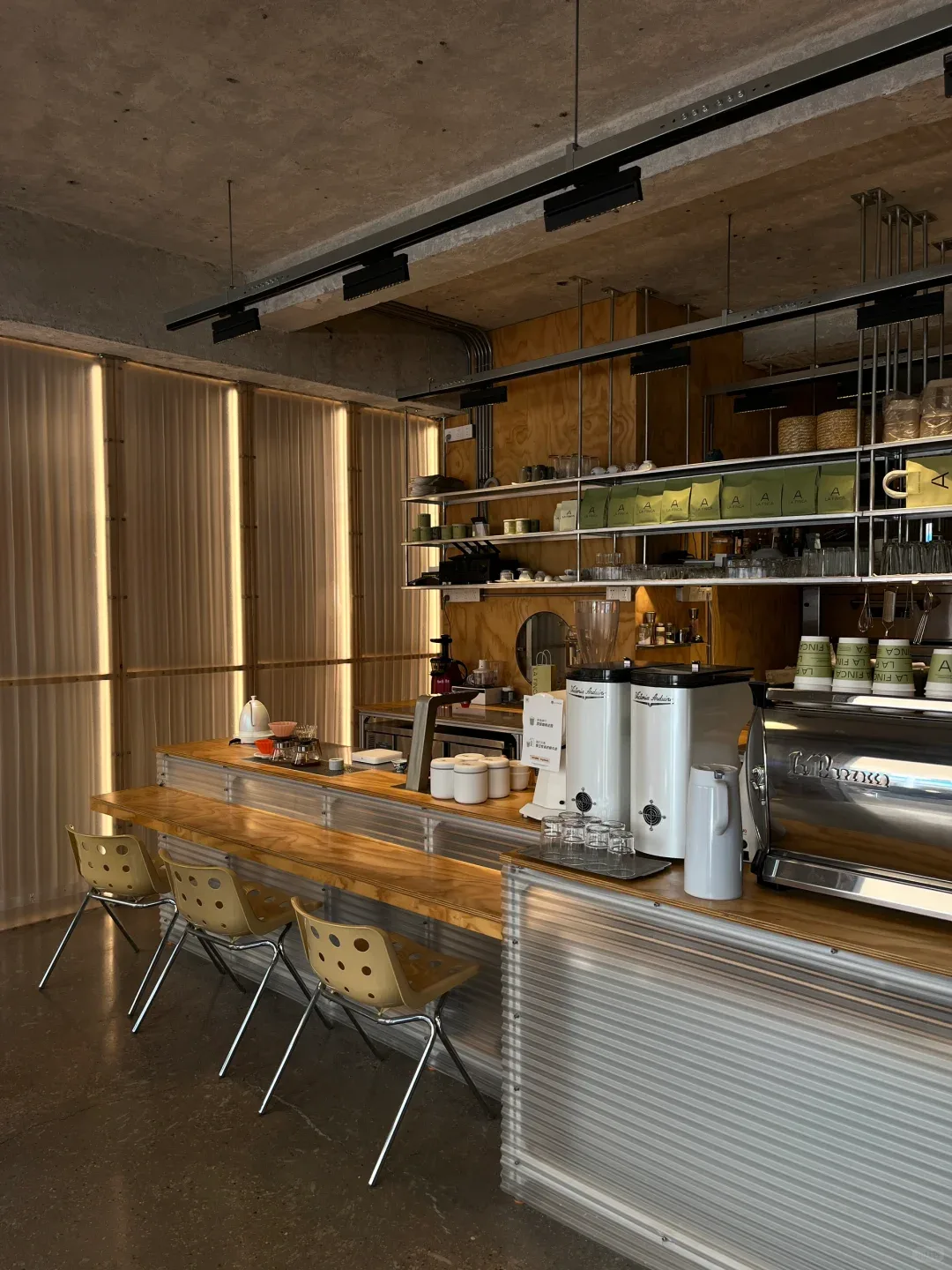
The building itself set the tone. Exposed concrete walls, bare ceiling pipes, and polished concrete floors gave the space a strong industrial backbone. Rather than softening those surfaces, we leaned into them. The custom bar counter uses corrugated galvanized steel panels for the fascia, paired with a solid warm-toned timber top. That combination — hard metal base, warm wood surface — gives the counter physical presence without feeling cold or unwelcoming.
Above the counter, we installed an open steel shelving system suspended from the ceiling. It holds glassware, coffee bean packaging, and brewing equipment in full view of customers. This is deliberate: visible storage tells a story about craft and transparency. And structurally, it keeps the upper wall area open, which makes the ceiling feel higher than it actually is. For cafe owners working with a low or industrial ceiling, this approach to commercial shelving design is worth considering.
Concept
Every strong cafe interior design starts with a material logic. Here, we worked with three: concrete, timber plywood, and metal. Concrete appears in the walls and floor as given — we did not add it, we simply left it. Timber plywood is the primary furniture material, used for the bar top, the long bench seat, the desk nook, and the wall paneling above the banquette. Metal comes in through the corrugated counter panels, the shelving frames, and the chair legs. Together, these three materials repeat across every zone, which is what makes the space feel cohesive rather than assembled from different sources.
The lighting reinforces this logic. Track lights on black rails handle task lighting over the bar. A warm backlit strip runs along the top of the banquette wall, turning the plywood panel into a soft glowing backdrop in the evening. Meanwhile, translucent corrugated divider panels diffuse daylight from the side, casting soft stripe shadows across the seating area. None of this is accidental — each light source does a specific job within the overall custom coffee shop concept.
Layout
One of the biggest challenges in cafe furniture layout is serving multiple customer types without any single zone feeling like an afterthought. Solo visitors want a focused spot. Pairs want a small table with some privacy. Groups need flexible seating. And some customers just want a quick counter seat to watch the barista work. This space handles all four. The long custom banquette along the wall seats solo customers side by side with round tables in between for pairs. A separate counter bar runs parallel to the brew station for those who want to sit close to the action.
Outside the main room, a small outdoor terrace extends the seating with low platform benches, round side tables, and cushioned stools — a lighter, more casual version of the interior furniture language. Connecting the two zones visually is a large window with a timber window seat, so customers inside and outside share a sightline. This kind of indoor-outdoor continuity is increasingly common in specialty coffee shops, and it is something custom furniture manufacturing makes much easier to execute than buying off the shelf.
Detail
Details are where custom furniture separates itself from generic alternatives. On the bar counter, we recessed a stainless steel drip mat into the surface — flush with the timber top — so the brew station stays clean without any add-on accessories. The counter also integrates a small knee ledge on the customer-facing side, making the bar seat more comfortable for extended stays. These are not features you find in a standard counter purchase. They come from understanding how a barista actually works and how a customer actually sits.
In the seating area, the banquette back panel doubles as a display surface — a strip of plywood with the cafe’s branding lightly printed on it, backlit from above. The round tables sit on brushed metal pedestal bases, which are easier to clean around than four-legged alternatives. And in the corner work desk nook, a pegboard panel provides flexible storage for small items, which keeps the surface clear. Every one of these details solves a real operational problem. That is the standard we apply across every custom commercial furniture project we take on.
What This Project Shows
A well-executed custom cafe fit-out is not about spending more money on furniture. It is about making every piece work harder — for the brand, for the operation, and for the customer experience. This project started with a raw industrial shell and ended with a space that feels intentional at every level: the bar counter, the seating zones, the shelving system, and the outdoor extension all speak the same material language.
If you are planning to open a coffee shop and want furniture that is built around your specific space and workflow — not adapted from a catalog — this is the kind of result custom manufacturing delivers. The process takes longer than buying ready-made, but the outcome is a cafe that is genuinely yours.
Interested in a similar fit-out for your cafe? Get in touch to discuss your floor plan and vision — and we will show you what is possible.