
Design reference: this page is not presented as a completed Benson Display client project. Use the layout and fixture ideas to describe your own requirements; specifications and project scope need separate confirmation.
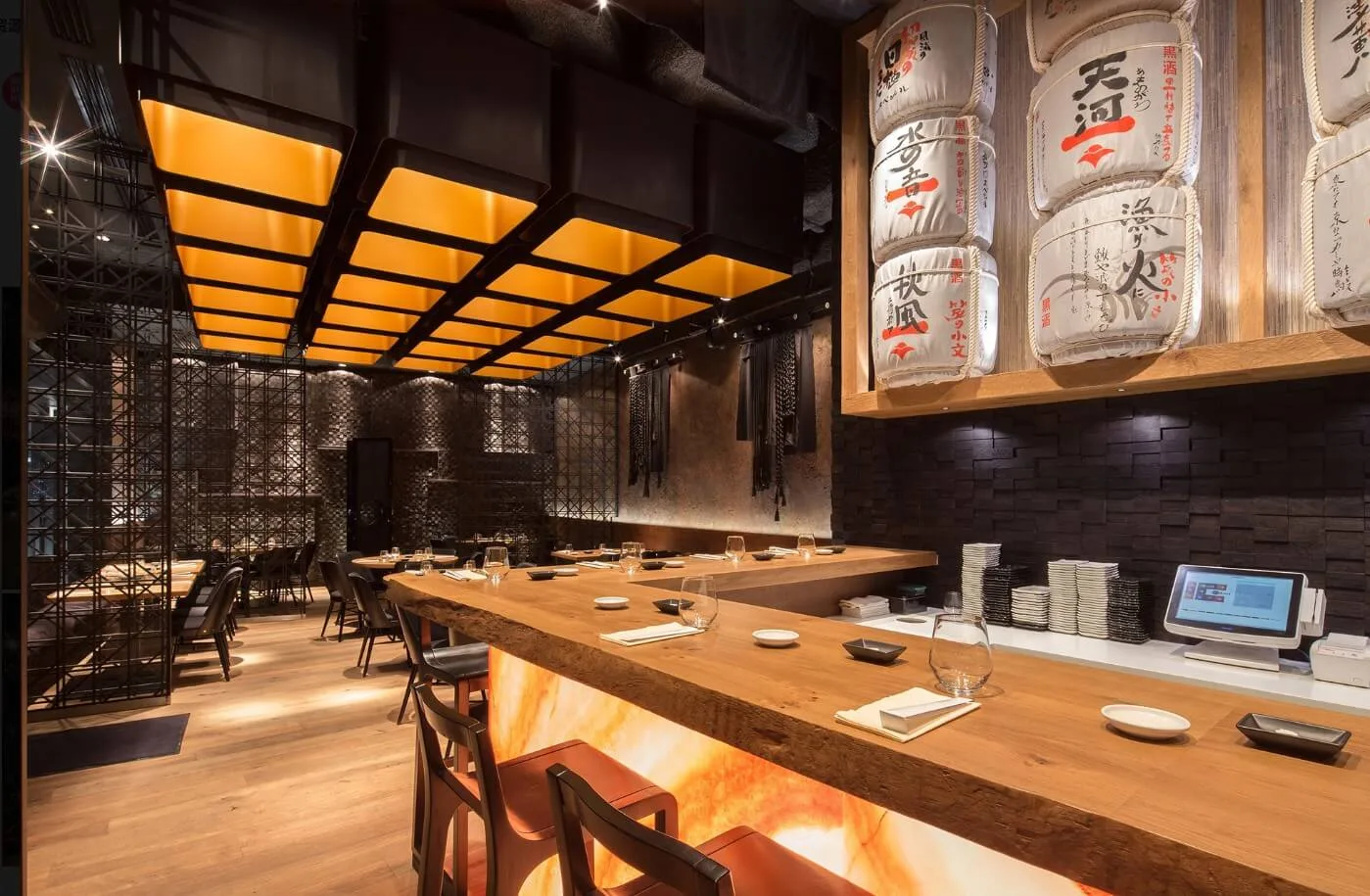
The Japanese style is no longer confine reproducing historical features such as sliding doors and tatami mats like it once was, and now evolves a new style by marrying tradition with modernity. An analysis of one sushi restaurant and how it successfully melds the tranquil grace of Japanese design elements with contemporary design aesthetics. This restaurant creates an immersive experience that accommodates both the enjoyment of fine sushi and the needs of socialising within a contemporary setting.
Design Concept
The designer creates the spatial tone with dark brown wood and black metal, creating a calm and warm atmosphere.
Wall design: The walls of the dining area have a rustic texture reminiscent of Japanese style. The surface deliberately retains subtle bumps and variations in light and shade. The black textile installation art hanging on the walls mimics the form of traditional Japanese tapestries with its flowing lines and woven texture.
Space division: The designer uses black metal lattice structures with geometric lines as partitions. This replaces the traditional wooden sliding doors. This transparent partitioning method not only divides the space into relatively independent dining areas but also maintains the visual connectivity of the space.
Transparent Stone Counter
Material: The light-permeable stone countertop was made primarily from natural materials. The pattern on the stone’s surface appears under the influence of LED illumination as if it had an orange glow from the inside. In addition to providing a warm feel to sushi, this material reflects its appearance beautifully.
Purpose: Light-permeable stone countertops not only provide a place to display food, but they are also opportunities for the chef to interact with the diners. The cigarette glow created when light passes through them gives the food a very flattering appearance. The warm texture of this stone reduces the coldness and hardness of metal and wood. It gives diners a sense of the warmth of Japan’s hospitality.
Dining Tables and Chairs
Tables: The dining table is predominantly construct walnut wood. Then coat a varnish to accentuate the innate grain and silky feel of the wood. While simultaneously creating contrast between the sharp angles of the square table and the soft, curved round table. Thus serving as a perfect solution for large or small dining gatherings, respectively. The attention-to-detail view that characterizes all Japanese design exemplifies.
Chairs: Diners will benefit from extremely supportive high-density foam cushions on each dining chair. As well as outstanding comfort when using the dining chair due to the curvature of the chair backrest. Thus allowing diners to remain comfortable while eating their meals for long periods. As the black fabric used for each cushion complements the overall dark aesthetic of the room. The dining chairs provide contrast to the heavy wooden elements through the slender lines of the metal frame.
Lighting
Lighting design plays a crucial role in the space. Through layered lighting, a dining environment that combines functionality with atmosphere is created.
Top lighting: The ceiling has a modular golden luminous panel. The warm yellow light is reflected by the metal panels, creating a soft reflection throughout the space. And establishing a warm tone for the entire area.
Key lighting: Embedded spotlights have been installed on the fabric wall fixtures and the sake bottle area. This not only highlights the key elements but also creates a contrast of light and shadow on the wall. The point lights above the dining tables create a personalized dining aura for each table of diners.
Conclusion
The design of this sushi restaurant successfully achieves a balance between traditional Japanese aesthetics and modern dining requirements. The warm surface of the transparent stone counter, the simplicity of the wooden furniture, and the transparency of the metal framework together create a multi-functional space that is suitable for both solitary appreciation and social gatherings.