
Design reference: this page is not presented as a completed Benson Display client project. Use the layout and fixture ideas to describe your own requirements; specifications and project scope need separate confirmation.
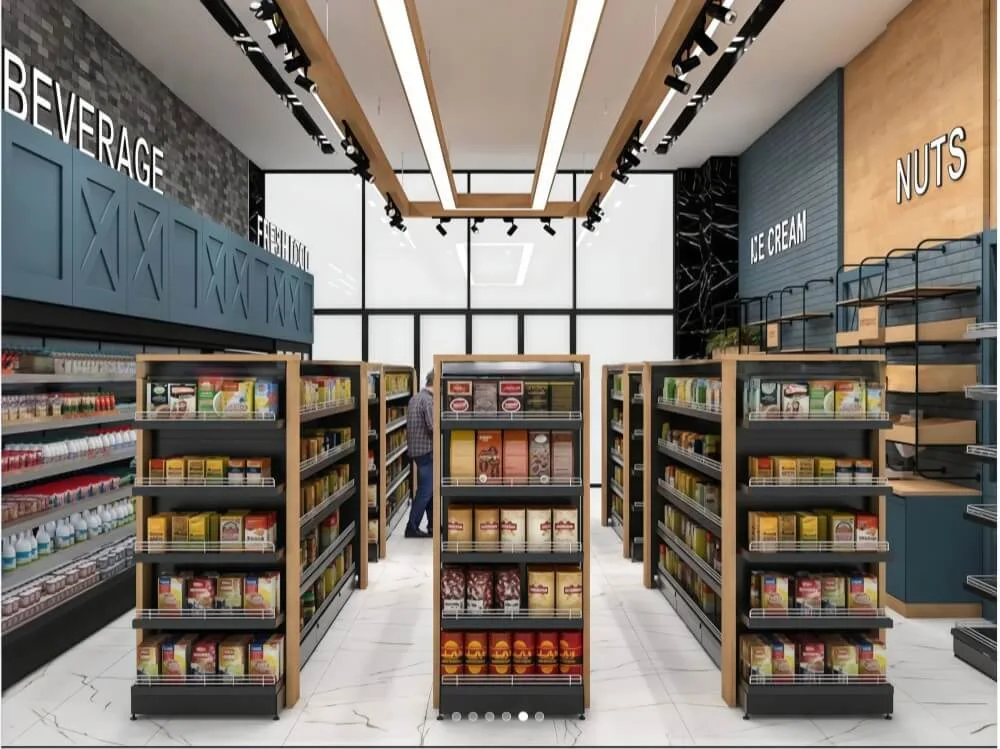
This minimalist convenience store has transformed the retail space into a living scene that combines practicality and aesthetic appeal through subtractive design. There are no redundant decorations, yet every detail is filled with precise attention to the consumer experience.
Design style
This store has chosen a calm aesthetic of low saturation and material collision. The main color tones are grayish blue and light wood tones, complemented by matte black metal frames and white marble-patterned floors. It not only avoids the clutter of colors but also adds spatial layers through the difference in materials.
The top does not use traditional full-ceiling fluorescent lamps but instead adopts a combination of recessed long lamps and track spotlights. Long lamps provide basic lighting, while spotlights focus on the shelf area. This design of light and dark zoning not only conforms to the restrained sense of minimalist style but also quietly enhances the visual appeal of the product.
Reception desk
In terms of layout, the reception desk is no longer a small corner at the entrance. On the front are two cash registers. Small shelves under the countertop, displaying high-frequency and essential goods such as chewing gum and beverages. The side is connected to an ice cream freezer, allowing consumers to take the ice cream directly when checking out.
In terms of details, the reception desk features light wood-colored panels paired with grayish-blue borders. Be in harmony with the overall style. The countertop reserves sufficient operating space. It also embeds a small charging interface.
Even more ingeniously, a light strip storage rack is n the wall behind the reception desk. It can not only display food but also enhance the warmth of the space through warm light. It adds a touch of life to the originally functional area.
Display racks
Materials and concept: Light wood paneling combined with strong black metal frame is used to create the shelves, which have a strong capacity to support weight due to their metal frames. Additionally, the shelves have an angled design that prevents products from sliding off of the shelves and creates an overall nicer presentation for display purposes. In contrast to the heavy static shelving found in most traditional convenience stores, the design creates a feeling of greater space and transparency in the store.
Functional zoning: The shelf heights differ, and they depend on the types of products they hold. High shelving and multiple-tiered narrow compartments incorporate the beverage section. Therefore, consumers can easily read the full labels of the various bottled beverages. The snack section has medium height and wide shelving for ease of display of different types of foods. Smaller type snack products like nuts and candy were incorporated into the wall through built-in shelving.
Flexible: The base of each shelf has been mounted on casters to make it possible for store management to adjust the layout of the shelf arrangement based on anticipated customer volume during peak purchasing times, as well as for other types of promotions. For example: Moving popular product assortments closer to the front of the store or temporarily freeing up space for smaller promotional events takes advantage of the store’s flexibility, allowing for greater adaptation to the ever-changing nature of retail.
Conclusion
The design of this convenience store is a reinterpretation of convenience stores. It doesn’t need to fill the space with dense goods and fancy decorations. Instead, it uses restrained design to return the space to convenience itself. In this era filled with information and goods, this kind of retail space has instead become a more comfortable zone that people are willing to stay in.