
Design reference: this page is not presented as a completed Benson Display client project. Use the layout and fixture ideas to describe your own requirements; specifications and project scope need separate confirmation.
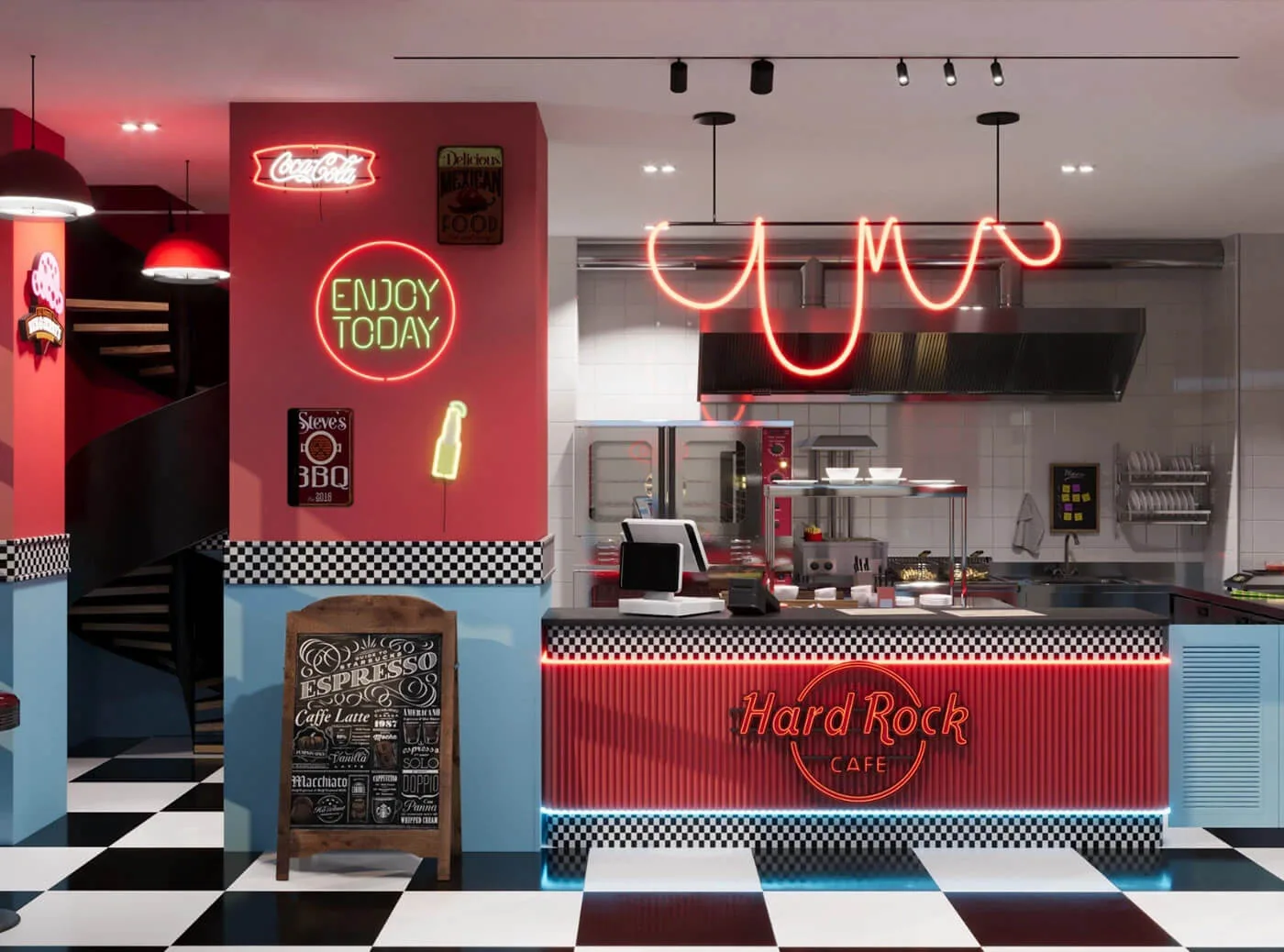
The retro American diner is more than a dining establishment—it is a cultural artifact, a time capsule of mid-20th-century American optimism, and a blueprint for balancing aesthetic appeal with operational efficiency. Rooted in the post-WWII era of car culture, roadside hospitality, and communal gathering, the diner’s design language has endured for decades, evolving to meet modern needs while retaining its iconic nostalgic charm.
Interior Design
The dominant color palette—cherry red, baby blue, black, and white—is a hallmark of 1950s American diner design, chosen for its psychological and aesthetic impact. Red, a color associated with appetite stimulation and energy, creating a lively atmosphere that encourages patrons to eat and socialize. Baby blue, a calming, complementary hue, balancing the intensity of red and creating a sense of visual stability. The checkered pattern also adds a rhythmic visual element that ties the walls to the floor, which features the same black-and-white checkered tile. This continuity creates a cohesive spatial narrative that reinforces the diner’s retro identity.
Vintage Accents
The columns are painted in the same two-tone red-and-blue scheme as the walls, with checkered tile borders at the top and bottom. These columns act as visual anchors, separating the bar area from the seating zones and creating a sense of structure in the open-plan space.
Wavy pink mirror is mounted on the red wall, a playful, iconic detail of 1950s diner design. Its distorted reflection adds visual interest and makes the space feel larger by reflecting light and movement. The mirror is positioned near the staircase, creating a focal point that draws patrons up to the upper level.
Vintage-style signs are mounted on walls throughout the diner design. These signs are not random—they are curated to reflect the diner’s menu and cultural identity, creating a narrative that connects the space to American food history. The A-frame chalkboard menus are movable, allowing the diner to update offerings easily and adding a functional, rustic touch to the interior.
Seat Area Layout
The layout of the seating area is a critical factor in the diner design success, as it must accommodate high volumes of patrons while maintaining comfort. The seating areas feature a mix of bar stools and window-side seating, designed to cater to different patron needs. A small nook with two red-cushioned bar stools is positioned against a baby blue wall, beneath a “Red Bull” neon sign. Two bar stools are positioned near a bank of large, black-framed windows. This placement allows natural light to flood the area, enhancing the dining experience and offering patrons a view of the street.
Bar Counter
The bar counters exemplify the material choices that define retro diner design aesthetics. The front facade features red corrugated MDF panel, with deep roots in 1950s industrial design. This wooden facade is edged with a black-and-white checkered ceramic tile border, a signature diner detail that runs horizontally along the top and bottom of the bar counter. The countertop itself is a solid black stone surface, chosen for its durability, stain resistance, and low maintenance. The countertop integrates a modern POS system, ordering and picking up food can be done in one go.
The retro American diner design endures because it taps into universal human desires: nostalgia, comfort, and connection. Diners emerged as affordable, accessible gathering places for Americans, reflecting the rise of car culture and the desire for casual, communal dining. The bold colors, neon signs, and checkered floors were a reaction to the optimism of the time, creating spaces that felt both familiar and exciting.